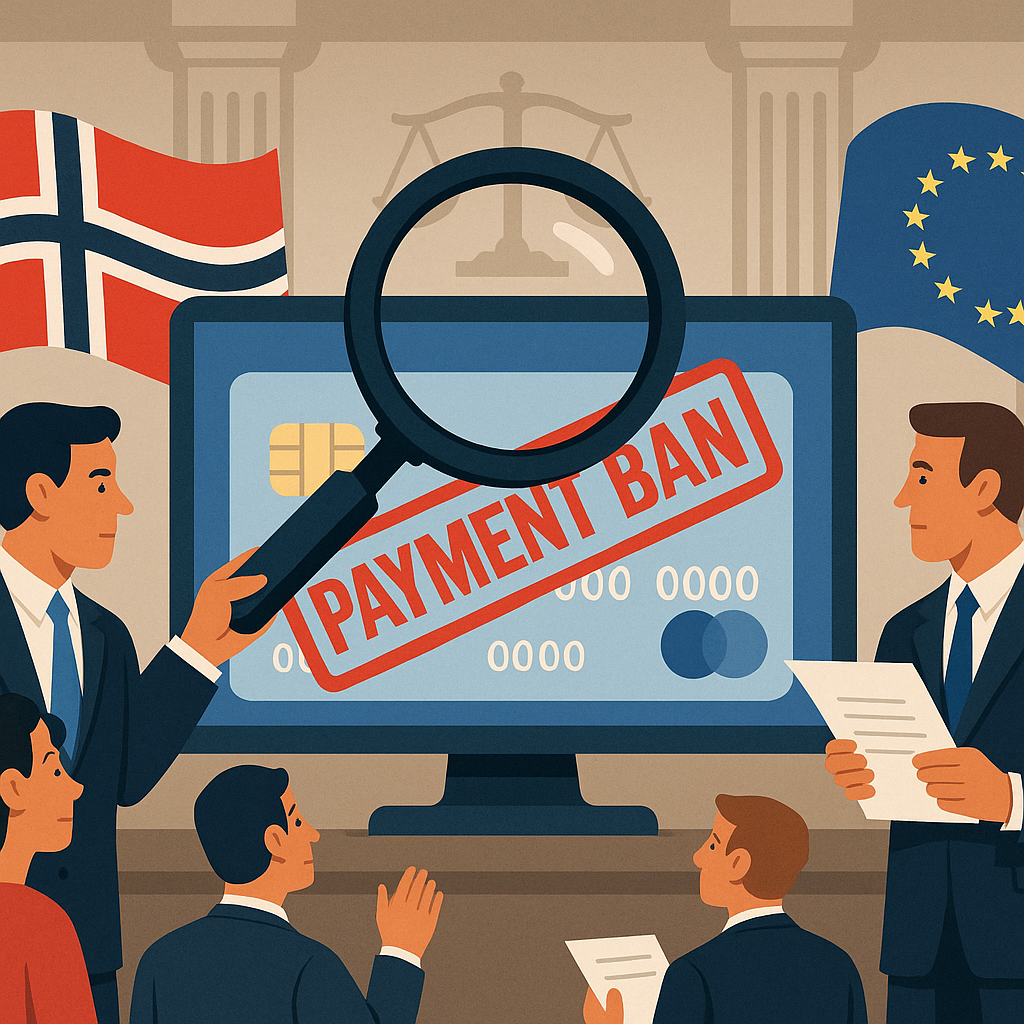
The payment ban of Norway on gambling is back in spotlight, this time as European authorities dig deeper. The European Economic Area (EEA) is now checking if limits on depositing and withdrawing money in Norway break rules about moving services freely.
This whole thing kind of feels like fork in the road for old fight over the gambling monopoly of Norway, offshore online sites and what European customers can do.
Table of Contents


Why Norway Went for a Payment Ban
Back in 2010, Norway rolled out a payment ban to keep control over gambling. Banks and payment companies got told to block the payments to and from gambling outfits that didn’t have license in Norway.
Two main goals:
- Get players using Norsk Tipping and Norsk Rikstoto
- Make it much tougher to reach gambling sites outside of Norway
At first, flow of transactions did drop. It didn’t take long though-people found new ways around block.
Why the EEA Gambling Investigation is a Big Deal
Right now, the EEA is trying to figure out if Norway’s payment ban fits with the EEA law or not.They Agreement of EEA is supposed to let people move goods and services easily between member countries. Critics say stopping cross-border payments is blocking that freedom.
If Norway loses this fight, they might need to loosen up or drop these rules. That could flip online gambling market for Norway upside down.
Tough Times for Norwegian Payment Companies
Banks and tech firms have mess on their hands. They have to spot and stop payments in certain categories mostly by looking at merchant codes. Real headache since tons of global companies use tricky payment systems and hiding gambling payments isn’t hard.
Fintechs and digital wallet providers have it even rougher. Their whole business is built on fast and easy payments (nobody wants slow transfers, right), but rules make them double-check everything. Sometimes, they even block legit payments just to stay safe. This means burning more money on tech and training which is tough for small startups as well as big players alike.
People using these services? Left in dark.Sometimes their money gets blocked and nobody explains why. Other times payments work anyway. Nobody seems sure what will happen with the deposits or withdrawals. Trust in the payment system takes a real hit.
The tension goes both ways. Regulators want tight control banks and payment companies say they’re doing too much of heavy lifting. It’s made for rocky partnership, with banks stuck between helping their customers and doing what government demands.

Tension with Norway’s Gambling Monopoly
Norway’s gambling monopoly leans hard on payment ban to slow down offshore competition. If ban vanished, Norsk Tipping and Norsk Rikstoto would probably lose even more players to international online gambling Norway sites. The EEA stepping in puts a spotlight right on the heart of Norway’s strict model.
Player Workarounds and What’s Really Happening
People who want to gamble online don’t just give up when rules get tighter. Instead of a regular card payments or bank transfers, they’re using new tricks. Prepaid cards work well here. You can grab one without showing an ID and use it to fill up gambling accounts without the same checks banks run.Pretty simple, really, if you don’t want anyone following your tracks.
Foreign e-wallets get a lot of use too. Set up an account outside Norway top up by regular bank transfer then link up with gambling platforms. Makes a buffer between gambler and the Norwegian rules. Maybe a bit more hassle, but it’s just normal now for plenty of people chasing international gaming sites.
Cryptocurrencies tossed an another spanner in the works. Bitcoin and Ethereum cross borders with no classic banks involved at all. Regulators can’t track them easily, control gets tricky. People who trust the tech don’t blink, they send crypto directly to offshore platforms. Hard to block close to impossible (especially for regulators stuck in old-school systems).
All these workarounds explain the tough rules don’t fully stick. Instead of stopping online gambling, they just push people to find sneaky payment methods. Because of that, the current European investigation actually matters. It asks if law really works as planned and if it plays nice with international agreements.
Comparing Norway to Its Neighbors
- Sweden? Dropped its monopoly in 2019, didn’t need a payment ban.
- Denmark? Runs a license system, payment solutions are regulated normally.
- Finland? Still sticking by its monopoly but planning changes for 2026.
Norway stands out here, the payment ban looks downright lonely among the Nordic countries.
What Might Happen with the EEA Gambling Investigation
- If they keep the ban, Norway sticks by its guns but faces a world of criticism.
- If the ban gets tweaked, maybe some rules stay some change to meet EEA demands.
- If the ban gets canned, Norway probably starts for a license model and ditches the old monopoly.
Every option affects the payment providers of Norway, offshore firms and players in online gambling Norway circles.
Author’s Thoughts
Blocking payments tied to gambling sparked a fiery debate in Europe. Fans claim it keeps consumers safe and lets state run the market. Critics call it an old-fashioned and out of touch with modern tech. Now European investigators are circling, pressure climbing fast. This probe could change how Norway handles gambling and maybe influence rules elsewhere too.
The state monopoly really sits on these financial barriers to keep locals playing their games. Lose the power to block the payments and users go global chasing better promos, bigger jackpots and more game variety. That could wreck the income stream of monopoly and push lawmakers to rethink whole setup.
Banks and tech companies find themselves squeezed in the middle. E-wallet firms, regular banks and fintech companies have spent years reshaping how their systems work just to follow Norway’s gambling rules (it’s cost a lot, honestly). With more changes possibly coming soon, they’ve got to keep building tools for check-ups and compliance even though everything could flip again if ban gets dumped. For these firms, it’s about much more than just obeying law, it’s about running smoothly and trusting regulators to stick to their word.
Wherever case goes, this whole back-and-forth shows Norway’s gambling rules hit a crossroads. People have to talk about how much control a country should have, how much international pressure matters and whether tough rules even work in a digital age full of loopholes and hacks.The aftermath won’t just shape Norway, it’ll ripple out across Europe’s gambling situation for years.